China semiconductor
11 days agoNews Editor

China’s 69 power semiconductor projects draw scrutiny as analysts flag long-term pressure on Texas Instruments

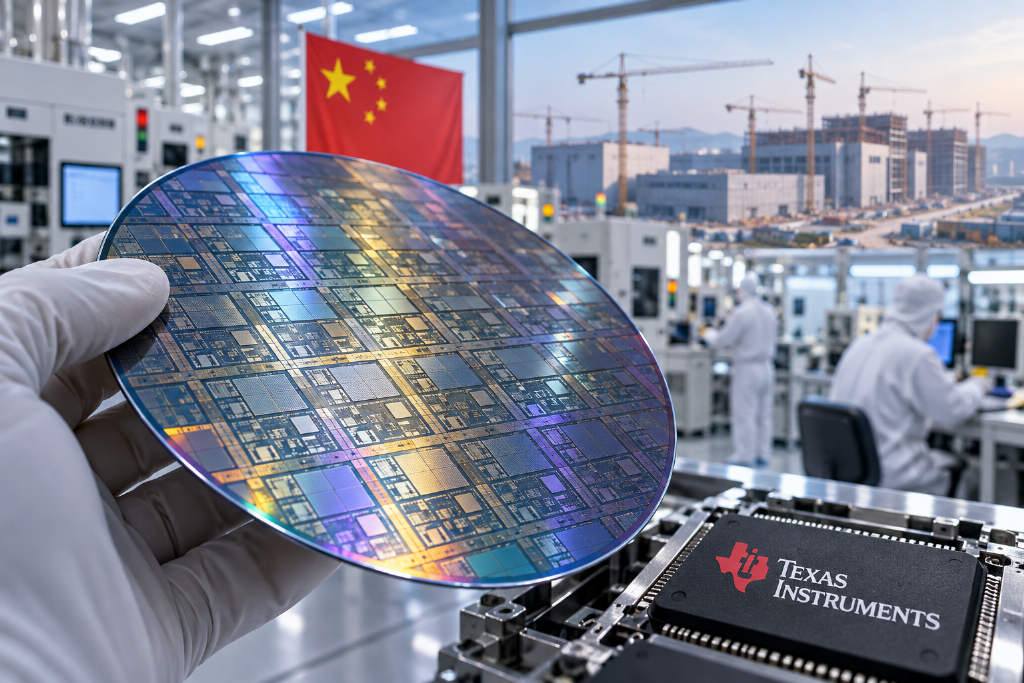
China’s semiconductor buildout may create competitive pressure beyond memory, according to analysts at Citrini Research. After attending a TrendForce roadshow in San Francisco, analyst Jukan said the steady localization of semiconductor equipment in China could lower the barriers to expanding mature-node capacity, prompting investors to reassess the long-term competitive position of companies such as Texas Instruments. A separate tally compiled by Citrini analyst Zephyr said roughly 58 suppliers are tied to 69 power semiconductor projects in China that are either in planning, under construction, or ramping production. The post was later reposted by Elon Musk, drawing wider attention to the scale of the expansion. Jukan’s argument is not that mature-node supply is already in broad oversupply. Instead, he frames it as a medium- to long-term risk scenario: AI demand is currently supporting power management ICs and power semiconductors, while some large foundries have reduced or shifted parts of their mature-node capacity. But if Chinese chipmakers gain easier access to domestic equipment and keep adding output, overseas suppliers could face pressure on pricing and market share over time.
420
China’s 69 power semiconductor projects draw scrutiny as analysts flag long-term pressure on Texas Instruments
Semiconductor Equipment
2 months agoNews Editor

Used semiconductor tools gain strategic weight as mature-node demand stays firm

Used semiconductor equipment is moving from a low-cost backup option to a core asset in mature-node chip manufacturing, as demand for automotive power devices, industrial control chips, analog chips, IoT MCUs and sensor chips remains strong. The article says many of these products continue to rely on 90nm to 28nm processes, while advanced-node development costs, tape-out fees and equipment spending keep rising and the performance gains from each generation narrow. According to the source, the global market for used semiconductor equipment exceeded 26 billion yuan in 2024 and could approach 66.5 billion yuan by 2031, implying a six-year compound annual growth rate of 14.4%. Supply conditions have also changed. Major chipmakers that once released retired tools into the secondary market are now keeping older equipment for internal process conversions, niche capacity expansion and maintenance, reducing the pool of tradable assets. The report also points to a structural mismatch inside the industry. Semiconductor manufacturing requires extreme precision and standardization, but the used-equipment trade still lacks unified grading standards, testing rules, warranty systems and credible third-party inspection institutions. At the same time, tighter global controls have expanded from advanced equipment and technology to retired tools, refurbished systems, spare parts, calibration services and firmware updates, making used tools a more important part of supply-chain security planning.

1410
Used semiconductor tools gain strategic weight as mature-node demand stays firm
Semiconductors
2 months agoNews Editor

Chip price increases spread as STMicroelectronics, ADI and Maxscend raise supply quotes

The semiconductor sector is entering another round of price increases driven by both supply-demand pressure and rising costs, with analog and RF chips at the center of the latest moves. Chinese media outlets including 21 Finance reported that multiple chip companies in China and overseas sent price adjustment notices to customers after the start of August. Documents circulating in the market show that STMicroelectronics, Analog Devices and Maxscend have all set new supply prices for the second half of the year. STMicroelectronics, a major supplier of power semiconductors and MCUs, plans to implement another price increase on Aug. 23 across several product lines. The company has already raised prices twice earlier in 2026. Analog Devices is set to roll out a broad portfolio-wide adjustment on Sept. 13, its second increase this year after a previous round took effect on Feb. 1. In China, RF front-end supplier Maxscend said its full RF product lineup will see higher supply prices starting Sept. 1, while Nationstech told Jiemian News it will raise prices on some high-performance MCUs by 10% to 20% from Oct. 1. The report said the latest round differs from the first half of the year, when HBM and server DRAM led the market. This time, pricing pressure has shifted toward mature-node chips, with AI demand, tighter foundry and packaging capacity, and higher raw material costs all feeding into the move.

2500
Chip price increases spread as STMicroelectronics, ADI and Maxscend raise supply quotes
TSMC
3 months agoNews Editor

TSMC’s planned mature-node price hike may start in January, while IC designers seek more capacity

Taiwan Semiconductor Manufacturing Co. (TSMC) is planning to raise foundry prices for mature process nodes starting in January next year, according to a report by Taiwan Economic Daily cited by Odaily. The report said the planned increase would come after price hikes on advanced process nodes. Even with higher mature-node pricing on the table, IC design companies still intend to negotiate for more foundry capacity for next year than they secured this year. Industry sources said they need additional support to keep expanding their operating scale. The report also said production costs for IC makers had already risen in the first half of this year after packaging and testing houses, along with foundries other than TSMC, lifted quotes for mature-node services. In response, companies had already discussed product price increases with clients. If TSMC goes ahead with the mature-node increase next year, IC design firms are expected to reopen pricing talks with customers. The report added that customers would then try to pass the higher costs further down the chain, creating a ripple effect across the supply chain.

1630
TSMC’s planned mature-node price hike may start in January, while IC designers seek more capacity